Product
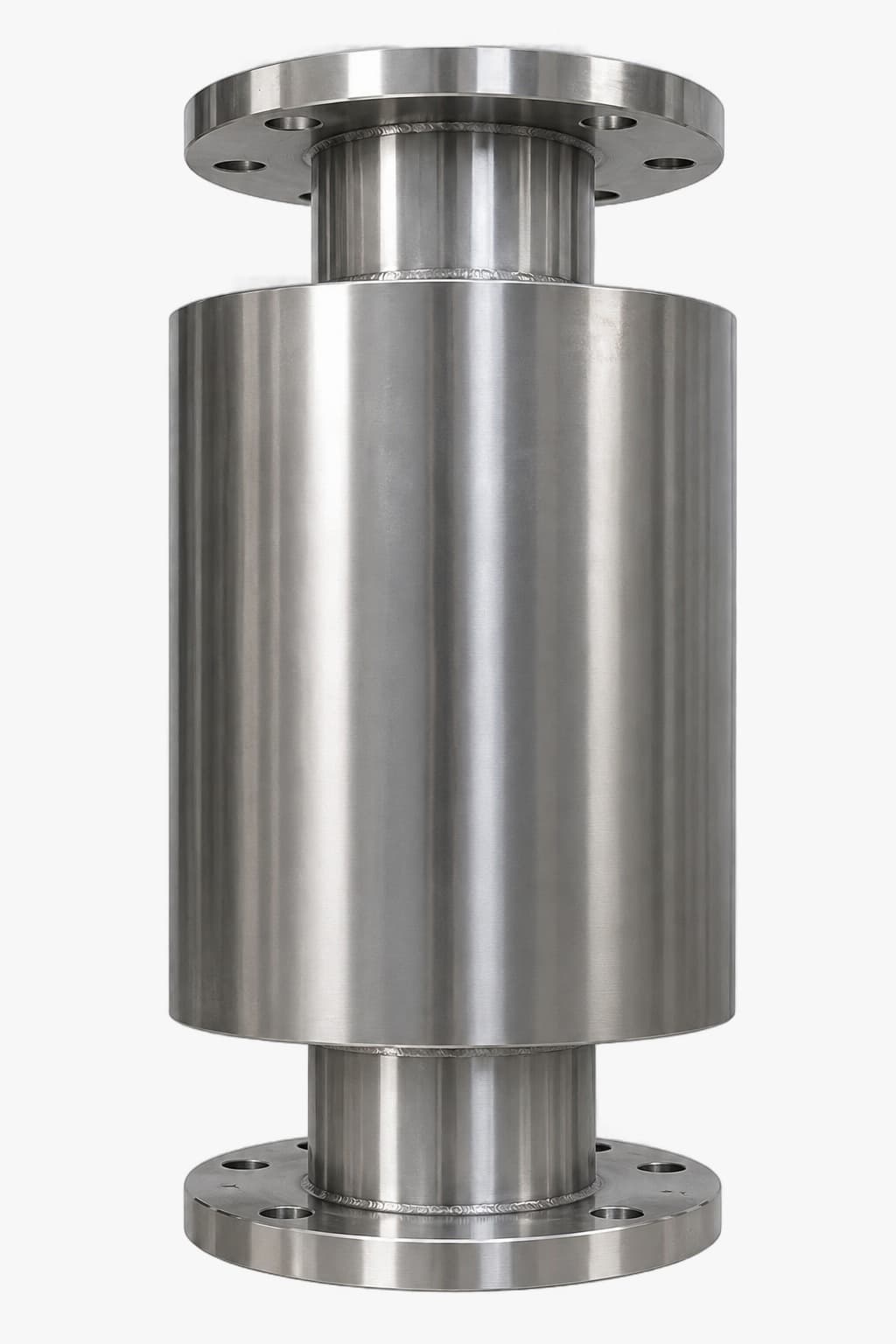
Magnifield-HSS1 Inline Magnetic Water Conditioner
A flanged inline magnetic water conditioner for irrigation and livestock supply. It treats the stream as it passes — physically, with no chemicals, no consumables and no moving parts in the flow path.
PDF · 2.1 MB · 7 pages
Key Features
One unit, 24 fields, nothing to replace
The HSS1 acts on the stream in series rather than at a single point, which is where its efficiency advantage over conventional single-field constructions comes from.
24 Cascaded Zones
A proprietary matrix of up to 24 sequenced magnetic zones acts on the stream in series rather than at a single point.
10,000–15,000 Gauss
Working flux density of 1 to 1.5 tesla, applied continuously to the passing fluid.
~10× Efficiency
The sequenced architecture delivers up to tenfold higher efficiency than comparable single-field constructions.
Zero Chemicals
Nothing is dosed, nothing is consumed and nothing is left in the soil or the crop.
Flanged Inline Fitting
Bolts into existing pipework as a pipe section — no bypass loop, no pressure vessel.
Stainless Construction
Polished stainless steel body and flanges, built for outdoor agricultural and heavy industrial service.
Operating Principle
Water goes in bound, comes out loose
Conditioning is governed by Lorentz force interactions on the moving fluid. The two variables that decide efficiency are flow velocity through the pipeline and the flux density of the field.
What changes in the water
- Decreases surface tension
- Minimises fluid viscosity
- Boosts mineral solubility
- Accelerates soil infiltration and oxygen absorption
- 01
Water enters the unit
Untreated irrigation water arrives bound into dense molecular clusters, with high surface tension and viscosity that impair soil infiltration.
- 02
Cascaded fields act on the stream
Up to 24 sequenced magnetic zones apply 1–1.5 T to the moving fluid. Efficiency is governed by flow velocity and flux density.
- 03
Structure is reorganised
Hydrogen bonds weaken and intermolecular cohesion drops, breaking large groupings into micro-clusters.
- 04
Conditioned water reaches the root
Lower surface tension and viscosity mean easier percolation through compact soil, and faster mineral dissolution at the root zone.
Technical Data
Specifications
Confirmed figures come from the HSS1 brochure. Sizing values are set against your pipeline diameter and flow rate.
| Parameter | Value |
|---|---|
| Magnetic zones | Up to 24 cascaded fields |
| Field strength | 10,000 – 15,000 gauss (1 – 1.5 T) |
| Relative efficiency | Up to ~10× comparable constructions |
| Treatment principle | Physical — magneto-hydrodynamic, Lorentz force |
| Chemical dosing | None — zero consumables |
| Connection | Flanged inline, both ends |
| Body material | Stainless steel, polishedto confirm |
| Nominal diameters | DN50 – DN300 (to be confirmed)to confirm |
| Operating pressure | To be confirmed from datasheetto confirm |
| Flow rate range | To be confirmed from datasheetto confirm |
Rows marked “to confirm” are awaiting the mechanical datasheet. Dimensions, pressure rating and flow range are configured per installation.
Applications
Where the HSS1 is installed
- Crop Irrigation photograph
Crop Irrigation
Cuts water demand, lowers fertilizer use and balances soil pH across field and greenhouse crops.
- Saline & Brackish Water photograph
Saline & Brackish Water
Makes marginal supplies usable by leaching salts 1–1.5 m below the active root zone.
- Livestock & Poultry photograph
Livestock & Poultry
Reported lower mortality, higher daily weight gain and improved egg-laying performance.
- Dairy & Pipelines photograph
Dairy & Pipelines
Lower bacterial counts in raw milk, and prevention of new limescale in supply piping.
Common Questions
What growers ask before installing
Straight answers on how magnetic conditioning works, what it does to saline water, and what it needs from you once it is in the line.
What is magnetic water treatment for irrigation?
Magnetic water treatment is a physical process: water flows through a magnetic field and its physical properties change, without anything being added to it or removed from it. In irrigation, the effects growers look for are lower surface tension and viscosity, which improve how water infiltrates soil, and higher mineral solubility, which affects how nutrients move to the root zone. Because it is physical, there is nothing to dose, refill or dispose of.
How does the Magnifield-HSS1 work?
The HSS1 fits inline as a flanged pipe section. As water passes through, a matrix of up to 24 sequenced magnetic zones applies a field of 10,000 to 15,000 gauss (1 to 1.5 tesla) to the stream. The process is governed by Lorentz force interactions on charged particles in the moving fluid, so the two variables that determine efficiency are flow velocity through the pipeline and the flux density of the field.
Does it use chemicals or electricity?
No chemicals at all — nothing is dosed into the water and nothing is consumed, so there are no refills and no disposal. The conditioning itself is physical. Talk to us about the supply requirement for your configuration and pipeline size.
Can it help with saline or brackish irrigation water?
That is one of the main reasons growers install it. Excessive soil salinisation restricts root development and blocks nutrient uptake. By improving solubility, percolation and infiltration, conditioned water flushes deeper, leaching mineral salts away from the root zone — Magnifield reports desalinization to 1 to 1.5 metres within the first year. It also makes marginal supplies such as brackish sources and treated effluent viable for cultivation.
What results do growers report?
Magnifield's published figures are a 10 to 30 percent reduction in water usage, a 10 to 25 percent or greater increase in yield, and soil desalinization to 1 to 1.5 metres in the first year. On the livestock side the reported results are a two- to threefold reduction in mortality, 5 to 7 percent higher average weight gain and around 10 percent improvement in egg-laying performance. Actual results depend on your water chemistry, soil and crop.
Where in the system should the unit be installed?
Inline on the supply side, upstream of the distribution network, so every emitter receives conditioned water. It bolts in as a flanged pipe section, which means no bypass loop and no pressure vessel. For dairy operations, a unit integrated directly into post-milking transfer lines is reported to double raw milk storage life in holding tanks.
Does it need maintenance or consumables?
There are no consumables — no cartridges, media, salt or dosing chemicals to buy. There are no moving parts in the flow path either. Routine attention is limited to the flanged joints, as with any inline pipe section.
Will it work with drip irrigation?
Yes, and drip systems are where the pipeline benefits show most clearly. Reduced fluid friction gives more uniform pressure across drip emitters and steadier discharge rates, and the treatment prevents new mineral buildup while clearing existing limescale from piping — which is exactly what blocks emitters on hard water.
Get the full HSS1 brochure.
Seven pages covering the operating principle, field results, salinity control and livestock data.